OpenAI · 2026
OpenAI at Lollapalooza Brasil
Making ChatGPT physical.
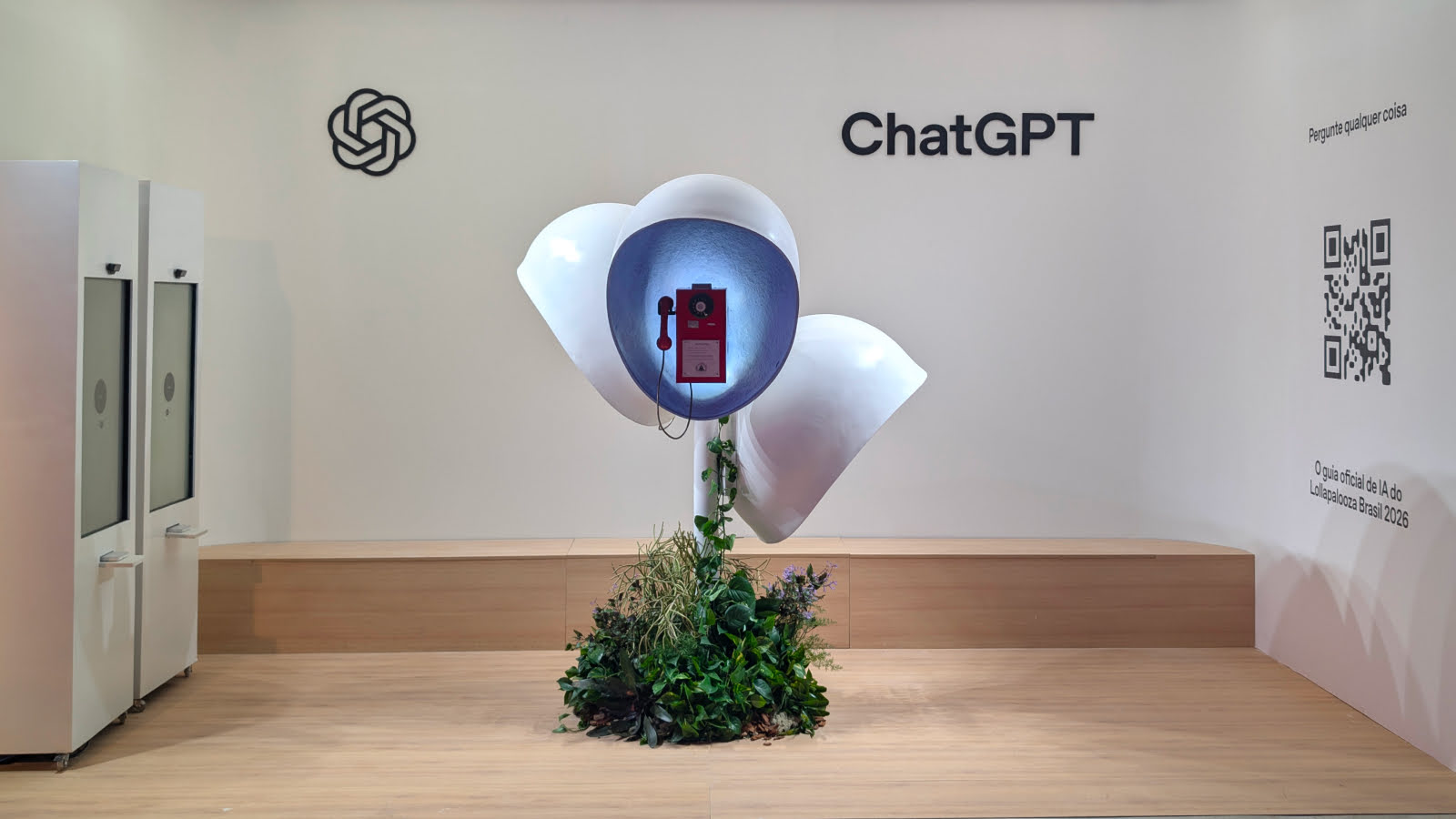
At Lollapalooza Brasil, I worked across a generative photobooth and a location-aware festival assistant inside a public phone.
OpenAI
UX/UI & AI Systems Engineer
Creative technology, Experience design, Conversational design
2026
01The brief
Bring ChatGPT into the middle of a festival
OpenAI came to Lollapalooza Brasil 2026 as the festival’s official AI guide. For its first marketing activation in Brazil, the company wanted to demonstrate image generation and realtime conversation through a physical experience inside Lolla Lounge.
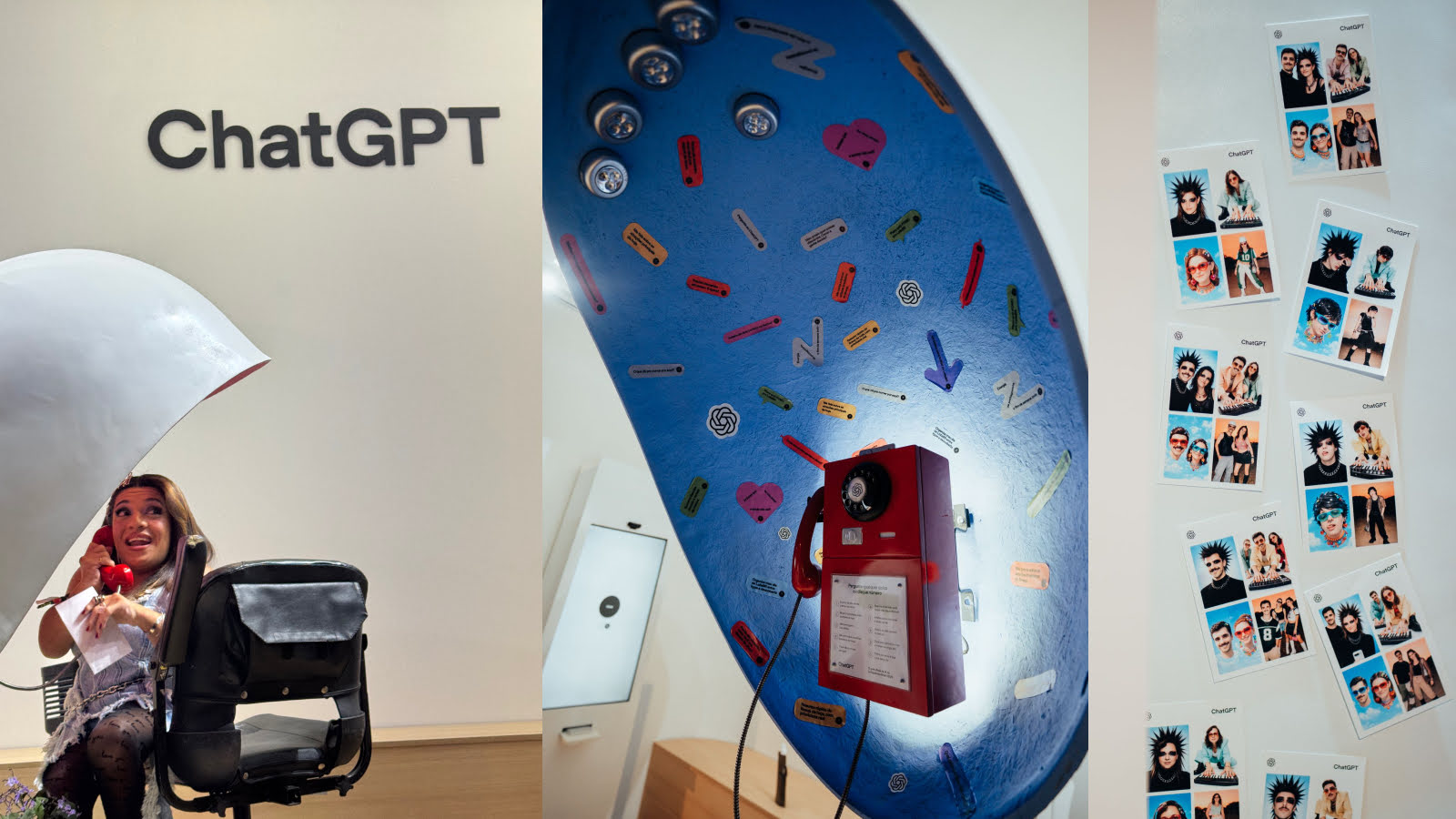
OpenAI, Fuse and Bolha collaborated on two ways into the technology. The photobooths turned portraits into stylised four-image prints. A red public telephone connected visitors to a voice assistant that could answer questions about the festival.
The starting points were deliberately familiar: take a photo, pick up a phone, turn a dial. People could understand what to do before the AI entered the experience.
02How I contributed
Connecting software, hardware and live information
I joined the project through Bolha, with responsibilities across both installations.
For the photobooths, I worked directly with the OpenAI team to localise the software for Brazil and implement it on site. I helped integrate the camera setup, capture WebUI and printer into one short flow that visitors and operators could follow.
For the phone booth, I contributed to the interaction, conversational behaviour and the tools that tied each answer to the live state of the event. This was developed with the wider team, who also built the conversational flow software and integrated the installation’s hardware. My contribution focused on how the assistant listened, responded and used current festival information during a call.
03Photobooth
A four-photo souvenir in a few steps
A visitor stepped in front of the camera, followed a short WebUI flow and received a stylised grid of four images, printed a few moments later.
I worked across every handoff in that sequence, localising the software and adapting it to the camera and print setup we had on site. Each stage needed to leave the next one with something usable: a valid capture, a completed transformation and a print job the operator could understand.
In a festival queue, small delays become very visible. The interface needed to move quickly without feeling abrupt, and the team needed to spot a failed capture or print before it confused the next person waiting.
04Phone booth
A festival guide people could call
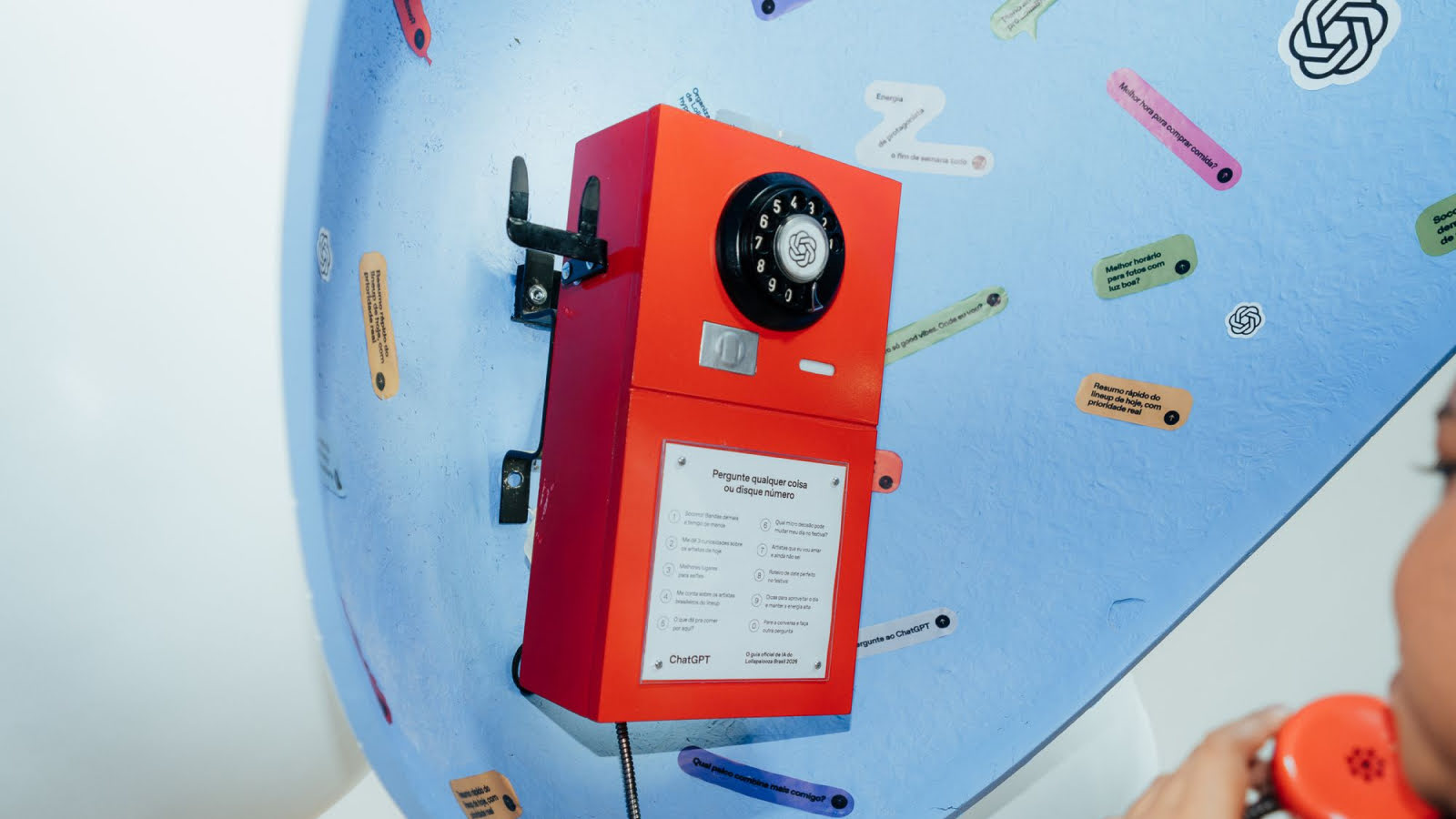
The phone booth began with an ordinary action: lift the receiver and talk. Visitors could also turn the analogue dial to trigger a prepared question. On the other end was an assistant that knew the artists, the schedule and where the phone stood inside the festival.
The interaction had to work by ear. Replies needed to be short enough to follow over a telephone and specific enough to help someone decide where to go next.
That made tone and timing practical design choices. A useful answer in the lounge sounded different from a block of copy written for a screen.
05Live context
Giving each answer a time and a place
I helped shape the tools the assistant used to query a changing set of festival information.
Current time divided the schedule into shows that had finished, shows underway and shows still ahead. The booth’s location gave directions and distance questions a reliable starting point. Updates made during the festival could change a recommendation or add context without rebuilding the whole conversation.
Localisation covered the language and tone, along with the practical way people ask about stages, artists, timing and directions in the middle of a Brazilian music festival.
06In the world
Two familiar gestures inside Lolla Lounge
Both installations ran inside Lolla Lounge during the festival. The photobooths produced printed portrait grids, while the red phone answered live questions about the schedule and the grounds. Bolha handled production and operation on site.
Within that shared effort, my contribution sat in the connections between OpenAI’s software, the local camera and printer, the conversational tools and the live event context. Visitors only needed to take a photo or make a call. The operational flow behind each gesture had to hold together while the festival kept moving.
07Looking back
Everything around the model counted as interface
The experience lived across cameras, printers, a telephone receiver, event data and the tools the team used to keep everything running. The model had to fit into that chain.
Most of my contribution happened where those parts met. I helped integrate OpenAI’s software with the equipment in the room, contributed to how the conversation accessed current information and stayed with the prototype under live festival conditions.
When those joins held, the technology could sit behind two actions everyone already knew: taking a photo and making a call.
Read more
The activation, documented
The project page covering the installations, production scope and public experience.
(opens in a new tab)Festival guideLollapalooza Brasil 2026 on ChatGPTThe custom ChatGPT created as the festival’s official AI guide.
(opens in a new tab)CoverageCBN: Orelhão do GPTA report on the public phone experience during the festival.
(opens in a new tab)CampaignMeio & Mensagem: A personal festival agentHow ChatGPT became a guide for schedules, recommendations and the on-site activation.
(opens in a new tab)BusinessTimes Brasil: OpenAI’s first Brazil campaignThe launch context and OpenAI’s approach to bringing ChatGPT into a cultural event.
(opens in a new tab)English coverageValor International: OpenAI meets Brazilian musicAn English-language view of the campaign and its relationship with young Brazilian audiences.
(opens in a new tab)Credits
Client and platformOpenAI
UX/UI & AI Systems EngineerCadu Fantin
Creative technology, production and operationBolha
Project collaborationFuse
FestivalLollapalooza Brasil