Bolha · 2024–ongoing
PRS / Tobias
Designing social robots.
I helped shape PRS across experience design, conversational behaviour, the operator UI and parts of the software behind it.
Bolha
UX/UI & AI Systems Engineer
Experience design, Conversational interaction, Product development
2024–ongoing
01The brief
Give a humanoid robot a social layer
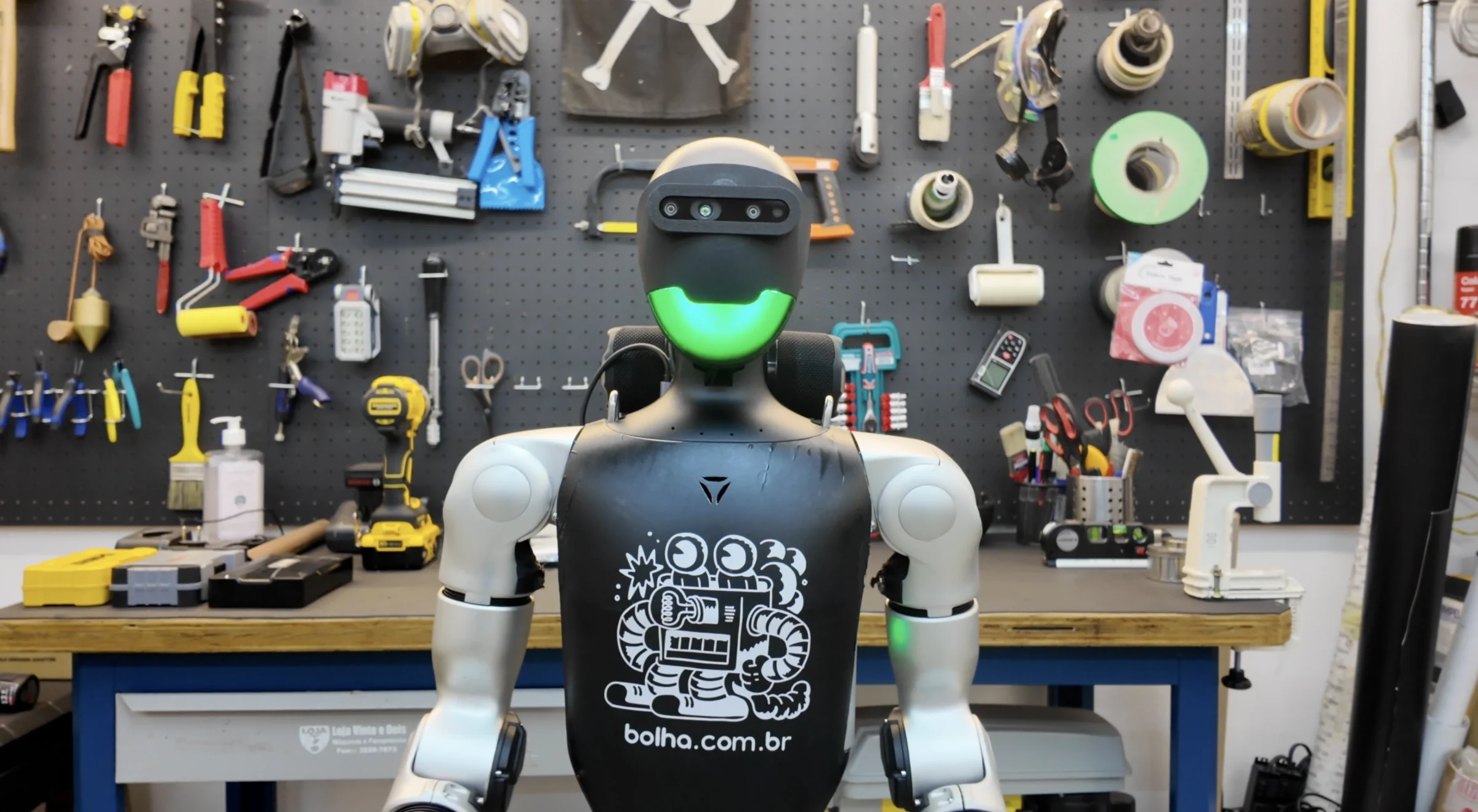
PRS stands for Personal Robot System. It began at Bolha in 2024 as an internal product built to turn humanoid hardware into a social presence people could actually talk to.
The job covered the voice model, personality, memory, vision and movement, along with an operator view clear enough to show what the robot was doing.
Tobias became the platform’s main public personality. His character lived in PRS, separate from the Unitree G1 Edu body running it. Keeping that distinction clear became central to the product.
02How I contributed
Designing from the operator screen to the robot
This case focuses on the parts I owned or shaped directly. I defined interaction behaviour, prototyped flows, designed the WebUI, shaped personality settings, tested the robot, debugged realtime failures and contributed to the implementation.
Working that close to the runtime made technical problems very visible as design problems. Latency became the pause someone waited through. An old camera frame changed the answer. A gesture that started late made a good line feel awkward.
The platform was shared across the team. My role kept me close to both the experience and implementation, carrying decisions from the interface into the runtime and back again.
03The system
Personality, perception and action in one runtime
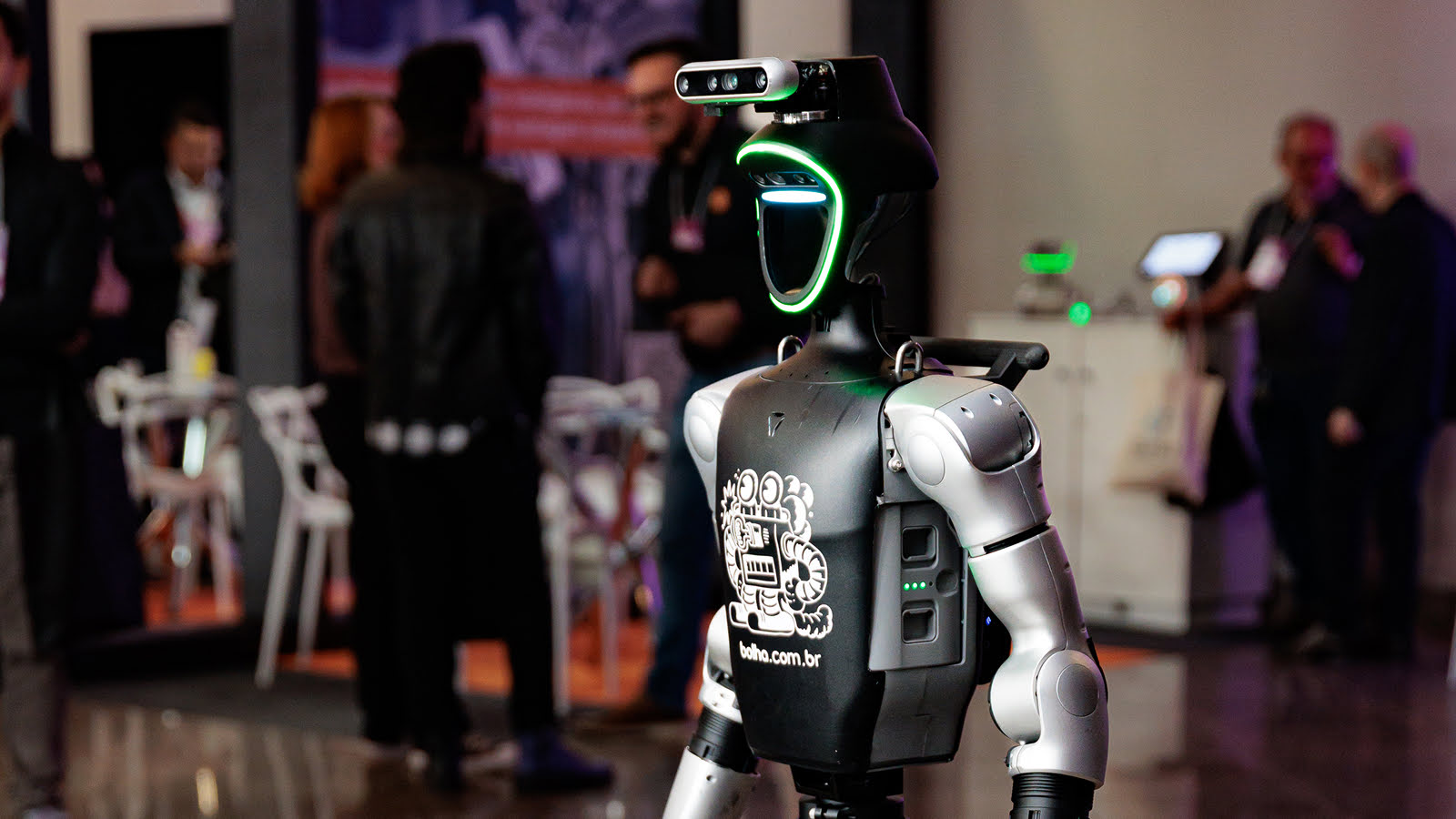
At the point documented here, the conversational model sat inside a layer called Brain and Soul. It managed the live voice session, interruptions, personality context and the coordination between speech and action.
PRS exposed a registered set of capabilities for memory, vision, gestures, motion, lighting, audio cues and system context. Requests passed through an orchestrator that checked each capability, sent it to the correct module and returned the result to the conversation. The model never controlled the hardware directly.
When the robot needed to look at the room, it requested an image from the vision module and waited for a real camera result before answering. Memory followed the same pattern: information could be captured in one conversation and brought back in a later session.
That separation let providers and hardware change while the personality remained usable across different robots and deployments.
04Operator tools
The interface behind the personality
One side of PRS was made for the people configuring and operating it. In the WebUI, they could create personality profiles, manage memories, choose runtime settings, start conversation sessions and see what each module was doing.
Profiles held the parts that belonged to the character, including identity, voice and conversational instructions. Advanced presets controlled the technical environment, such as active modules, hardware behaviour and runtime policies. Keeping those layers separate made it possible to adjust a personality without burying infrastructure choices inside it.
I designed and developed the live controller surfaces for camera and audio feeds, robot state, events, logs and direct interventions. When something felt wrong in front of the robot, the operator needed to tell whether it came from audio, the model, a provider, the network or the hardware.
05Embodied interaction
Conversation had to work through a body
People met PRS through a body. There was no conventional screen between them. They spoke, interrupted, moved in and out of the camera, waited for a response and read meaning into every pause.
I designed the interaction across voice and physical behaviour: how the robot opened a conversation, handled an interruption, paired gestures with speech and brought vision or memory into a reply. Recovery was part of the same work. The robot still needed to make sense when a capability was unavailable or an action took longer than expected.
A written response could be correct and still fail when the voice timing felt off, the arms moved at the wrong moment or the robot did not acknowledge the person in front of it.
06Field testing
Public events found the edge cases
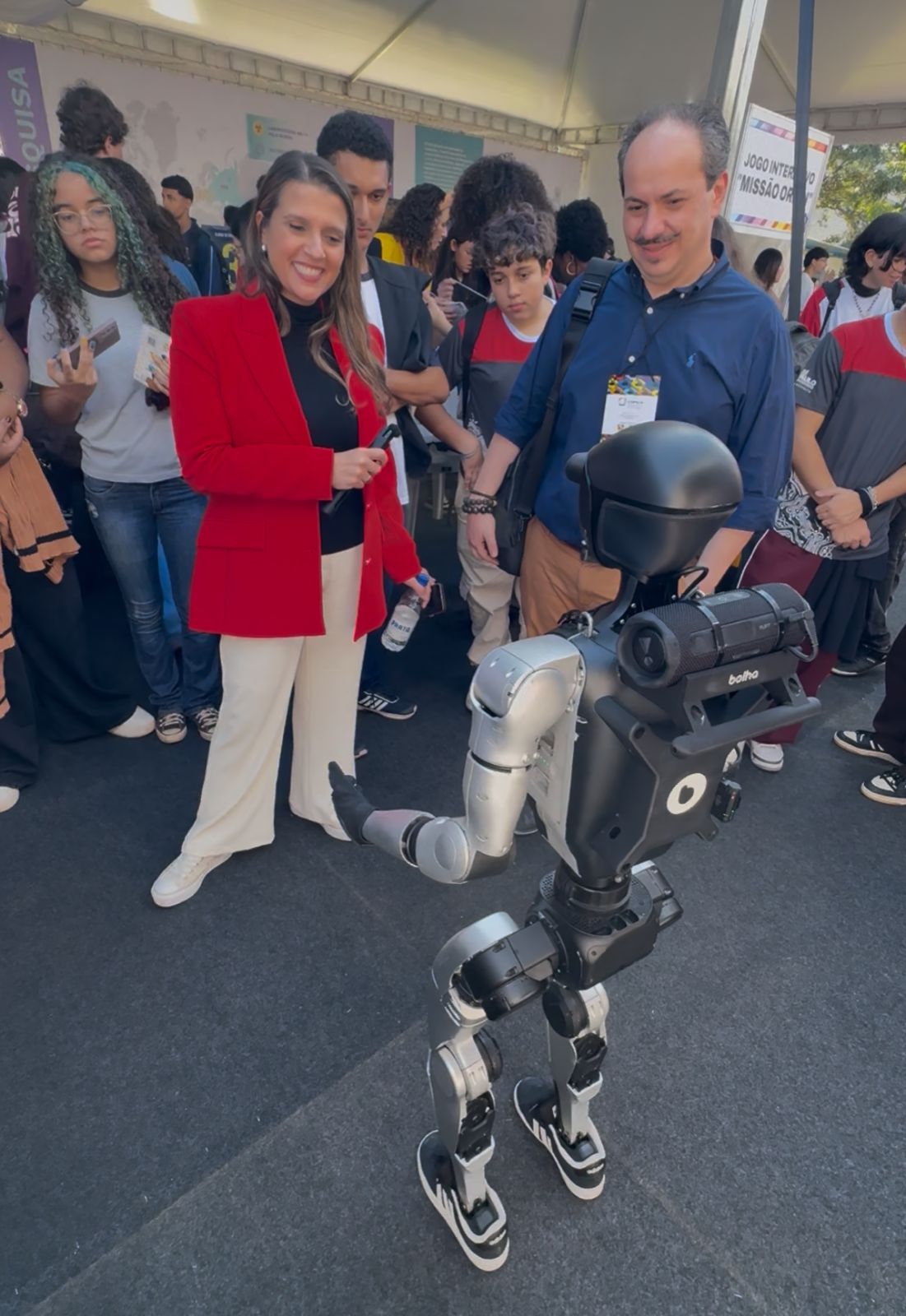
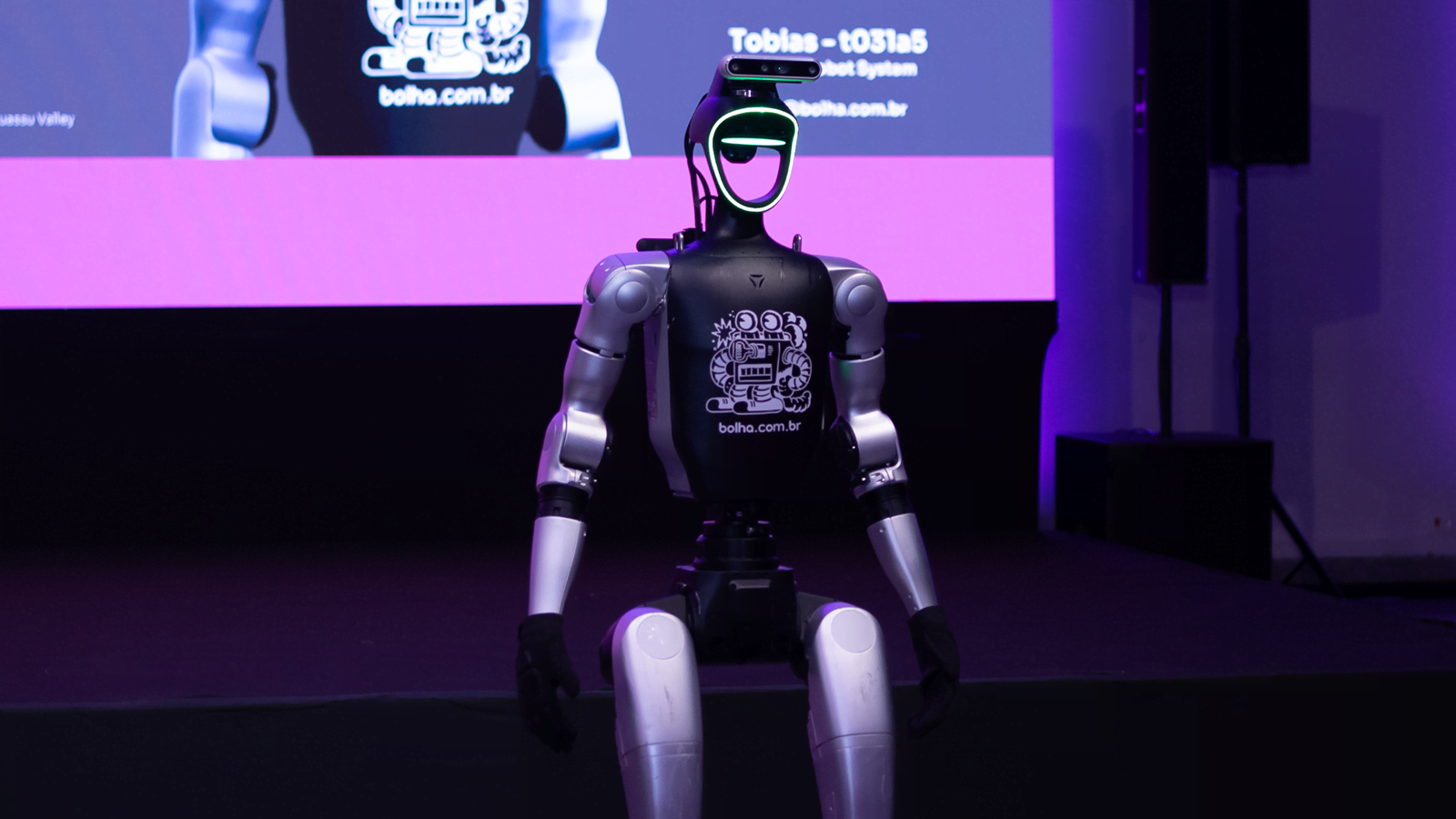
Tobias put the platform in situations that were hard to reproduce in the workshop. At Summit Iguassu Valley, he appeared on stage during an event with more than three thousand attendees. At Ciência Aberta 2026, he spoke with visitors, danced, performed capoeira and interacted with Germana Pires during a wider event that received around 30,000 people.
Podcast appearances added another kind of pressure. Longer conversations moved beyond a quick demonstration and brought follow-up questions, opinions and interruptions into the same session.
Those public tests exposed noisy rooms, overlapping voices, unstable networks and actions that took longer on hardware than they did in a prototype. Each one gave the team a clearer list of what the product needed next.
07In the world
The same platform gave Sol a different character
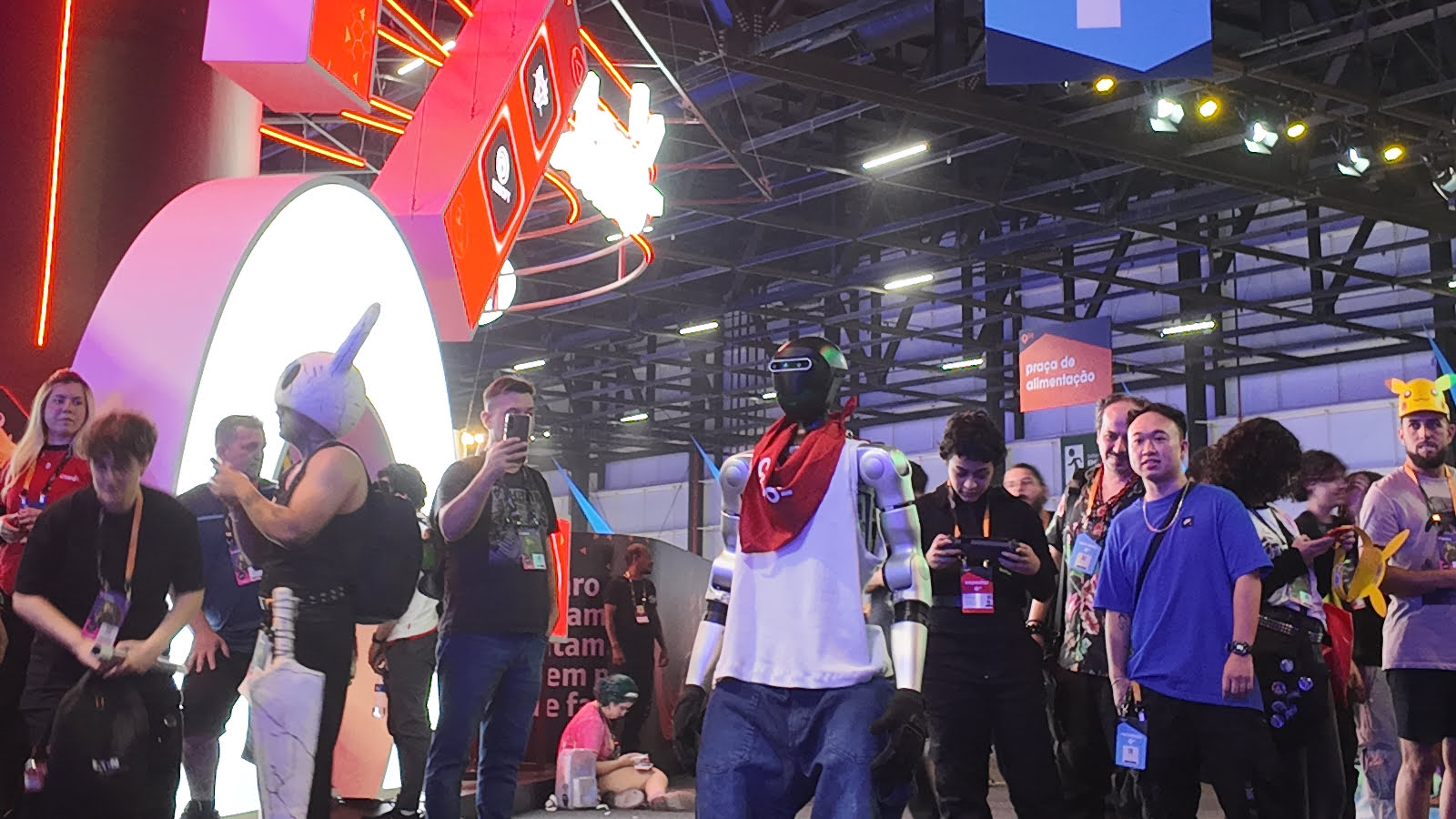
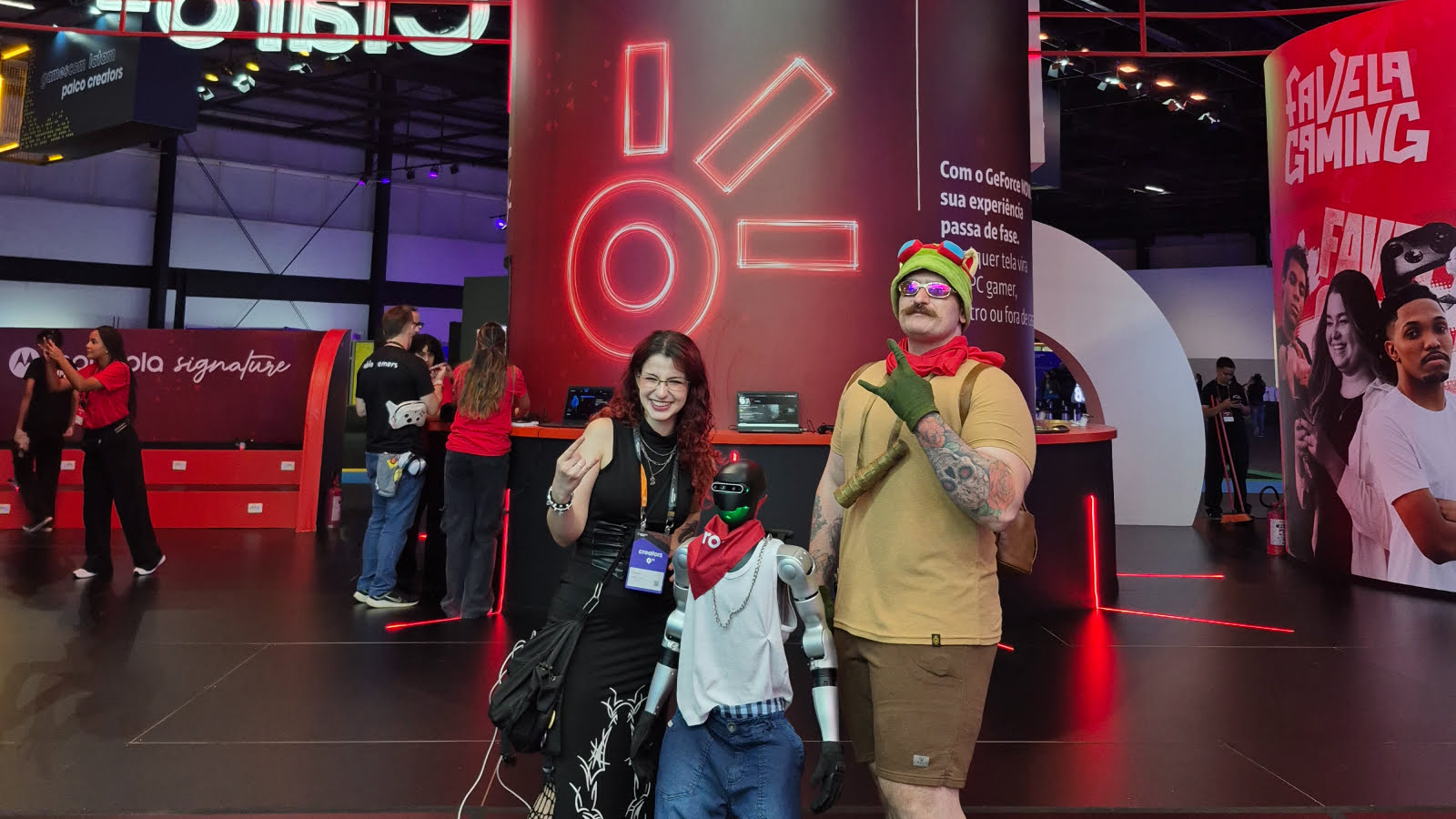
For gamescom latam 2026, Claro wanted a new way for visitors to encounter its gaming products. The team used PRS to create Sol, a gamer personality with knowledge of the brand, a point of view rooted in gaming and geek culture, and a CJ costume from GTA: San Andreas.
Sol talked with the crowd, danced and performed staged fights. We changed the voice, knowledge, instructions and behaviour for that deployment while keeping the same robot platform. Sol made the product boundary easy to see: Tobias was one personality, while PRS could support another.
08Looking back
The robot changed my idea of an interface
PRS is still in development, and I am still involved. This case records the product and my contribution at its current stage.
The public deployments made me more precise about runtime state, interruption and recovery because people read each one through the robot’s behaviour. A delayed reply could feel like hesitation. A stale memory could change the character. A gesture at the wrong time could undo an otherwise good response.
I came away with a wider definition of interface design. It included the screen, the event queue, the personality instructions and the few hundred milliseconds between hearing and replying.
Read more
PRS and Tobias, documented
The public product page for PRS, Tobias and the Unitree G1 Edu platform.
(opens in a new tab)Instagram@tobiasoroboTobias’s public profile, with appearances, tests and day-to-day moments from the project.
(opens in a new tab)Public eventCiência Aberta 2026Bolha’s account of the public demonstration developed with CTI Renato Archer.
(opens in a new tab)Independent recordCTI Renato Archer: Ciência AbertaThe government research centre’s report on Tobias, PRS and the event.
(opens in a new tab)ActivationSol at gamescom latam 2026Bolha’s case showing how PRS was used to create a different personality for Claro.
(opens in a new tab)PodcastObcecadas por RobôsA conversation about Tobias, creative technology and the future of robotics in Brazil.
(opens in a new tab)Credits
Product and developmentBolha
UX/UI & AI Systems EngineerCadu Fantin
Humanoid platformUnitree G1 Edu
Public collaborationCTI Renato Archer, Divisão de Sistemas Ciberfísicos
Gamescom activationClaro / gamescom latam 2026